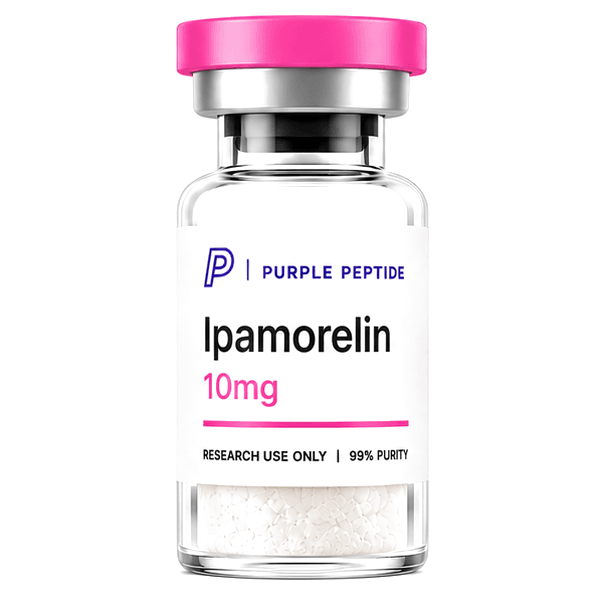
Ipamorelin, the first selective growth hormone secretagogue
Raun K, Hansen BS, Johansen NL, Thøgersen H, Madsen K, Ankersen M, Andersen PH. Eur J Endocrinol. 1998 Nov;139(5):552–61. View source ↗
This landmark paper from Novo Nordisk describes the design, synthesis, and pharmacological characterization of ipamorelin, a pentapeptide (Aib-His-D-2-Nal-D-Phe-Lys-NH2) identified within a series of compounds lacking the central Ala-Trp dipeptide of growth hormone-releasing peptide (GHRP)-1. In primary rat pituitary cell cultures, ipamorelin released growth hormone with potency and efficacy comparable to GHRP-6. In anesthetized swine, intravenous administration produced a dose-dependent rise in plasma growth hormone. Critically, the authors reported that ipamorelin did not elevate ACTH or cortisol above baseline at doses more than 200-fold above the ED50 for growth hormone release — a selectivity profile distinct from earlier GHRPs such as GHRP-6 and hexarelin. Prolactin release was likewise not significantly stimulated, framing ipamorelin as the first GHRP-receptor agonist with this clean secretory profile.
Researchers at Novo Nordisk designed a small five-amino-acid peptide and tested how it triggers growth hormone release. In both isolated pituitary cells and live pigs, ipamorelin released growth hormone just as strongly as earlier compounds in its class. The key finding was what it did not do: it did not raise cortisol, ACTH, or prolactin — three hormones that other peptides in this family tend to push up as an unwanted side effect. This selectivity is the reason ipamorelin became a reference point for studying growth hormone biology without the noise of other hormonal changes.